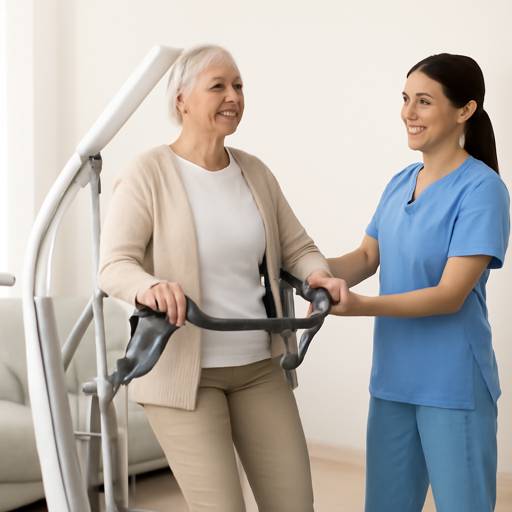
For individuals recovering from surgery, managing chronic conditions, or simply facing the natural challenges of aging, the simple act of standing can become a monumental task. Yet, standing is more than just a movement; it is a critical function for maintaining bone density, improving circulation, and preserving dignity. A sit to stand lift is not merely a piece of medical equipment; it is a bridge between dependency and independence. Unlike total floor lifts that require full suspension, these devices are designed for patients who possess some weight-bearing capability but lack the strength or balance to rise safely on their own. The core functionality is elegant: the patient sits on a padded sling or a contoured seat, and the lift gently tilts them forward into a standing position. This transitional motion mimics natural human biomechanics, making the process less intimidating and more therapeutic. Caregivers benefit immensely as well, as the lift eliminates the awkward, spine-stressing postures often required during manual transfers. When you explore the market for a sit to stand lift for sale, you are investing in a system that prioritizes safety for both the user and the assistant. These lifts are rigorously tested to handle specific weight capacities, often reaching 400 to 600 pounds, ensuring they accommodate diverse patient populations. The base design typically features wide, sturdy legs that provide exceptional stability, while hydraulic or electric actuators deliver smooth, controlled motion. Modern units also include features like padded knee pads to prevent sliding and intuitive hand controls that allow the user to self-operate the lift if possible. The result is a seamless integration into a daily care routine that preserves the patient's residual strength and fosters a sense of autonomy.
The decision to purchase a sit to stand lift moves beyond simple convenience; it becomes a medical necessity in many environments. Physical therapists often recommend these devices to reinforce proper standing mechanics and to engage core muscles in a safe, guided manner. For caregivers, the lift is a shield against chronic injuries. The National Institute for Occupational Safety and Health (NIOSH) has long highlighted that manual patient handling is a primary cause of work-related musculoskeletal disorders in healthcare. A high-quality lift mitigates this risk by transferring the mechanical load from the human body to the machine's structure. Therefore, when you search for a sit to stand lift for sale, you are not just buying a tool; you are buying a long-term strategy for sustainable care delivery. The market offers a spectrum of options, from basic models with manual hydraulic pumps to technologically advanced units with battery backup systems and digital weight displays. Battery-powered lifts are particularly valuable in home settings where outlets may be scarce, allowing for uninterrupted transfers between the bed, chair, and toilet. Durability is another critical factor. Look for frames constructed from heavy-gauge steel with anti-microbial paint finishes that withstand rigorous cleaning protocols. The slings themselves are made from breathable, high-tenacity fabric with reinforced seams and quick-release attachments for easy swapping. Ultimately, the ideal unit combines strong ergonomics with robust construction to ensure it performs reliably for years.
Critical Features to Evaluate When Assessing Your Purchase Options
Navigating the specifications of a sit to stand lift can be overwhelming, but understanding a few critical features will help you make an informed decision. First and foremost is the weight capacity. This is non-negotiable; you must confirm the lift can handle the patient’s maximum weight, including any clothing or accessories. Always choose a model with a safety margin above the patient's current weight. The second vital component is the base and leg design. Most lifts utilize a "spread" base system, where the legs open wider to surround the chair or wheelchair. Some bases are manually operated with a foot pedal, while others are powered. A wider base offers superior stability but requires more floor clearance. You must measure the space under the bed, around the toilet, and near the patient's favorite chair to ensure the lift can maneuver effectively. The lifting mechanism itself is another differentiator. Electric actuators provide the quietest, most consistent motion and require the least physical effort from the caregiver. Hydraulic systems are typically more affordable and reliable in the long term, but they demand manual pumping, which can be fatiguing during multiple transfers throughout the day.
The sling or seat design directly impacts patient comfort and safety. A universal sling works for many, but patients with specific needs—such as post-hip replacement or severe contractures—may require a commode seat or a custom sling with extra lateral support. Check the sling attachment points; the best systems use color-coded loops and quick-connect clips that are easy to attach even when the patient is seated. Floor clearance is another often-overlooked element. The lift must be able to roll under a bed frame or wheelchair without scraping the floor. Most units offer a minimum clearance of 5 to 6 inches, but verify this against your own furniture. Portability is crucial if the lift will be used in multiple rooms. Some models are designed to be disassembled easily for transport in a car trunk, while others are integrated with locking casters that allow for easy rolling but remain stationary during use. You will find many options listed as a sit to stand lift for sale that claim to be "portable," but always check the weight of the base and mast. A truly portable lift should break down into components under 40 pounds. Finally, evaluate the control interface. Is it a simple hand pendant? Does it have a backup manual hand crank for emergency lowering? The controls should be intuitive for both the caregiver and, if applicable, the patient. Investing time in understanding these feature sets will ensure the lift you purchase integrates perfectly into your daily routine.
Real-World Applications: From Home Care to Rehabilitation Facilities
The versatility of sit to stand lifts makes them indispensable across a wide range of environments. In the home care setting, these lifts are often used by families caring for a loved one with Parkinson’s disease or multiple sclerosis. A case study from a home health agency in the Midwest tracked the use of a sit to stand lift with a 72-year-old male patient with advanced Parkinson’s. Prior to the lift, two caregivers were required to assist him, and he suffered from frequent near-falls. After introducing the lift, transfers became a one-caregiver task, and the patient reported a significant improvement in his mood, as he could now stand without fear of falling. The lift allowed him to participate in standing exercises, which slowed the progression of muscle weakness. This real-world example underscores how the social and psychological benefits of the lift are just as profound as the physical ones.
In skilled nursing and rehabilitation facilities, sit to stand lifts are employed for more than just daily transfers. Physical therapists use them as therapeutic tools. For instance, during gait training, a patient can use the lift for support while taking steps, allowing the therapist to focus on correcting stride patterns rather than catching the patient. A facility in Florida replaced its older, worn models with newer units that featured digital weight scales. The therapists discovered they could use the weight readings to objectively measure the amount of weight the patient was bearing during standing exercises, turning a simple transfer into a quantifiable therapeutic intervention. This led to better patient outcomes and more efficient therapy sessions. In the long-term acute care (LTAC) setting, bariatric sit to stand lifts with capacities over 600 pounds have revolutionized care for heavier patients. Manual handling of a bariatric patient without proper equipment carries extreme injury risk for staff. Units with extra-wide bases and reinforced frames allow for safe, dignified transfers that preserve the patient's mobility. These facilities also rely on the lift to assist with toileting and hygiene tasks, which are often the most challenging aspects of care. When you see a sit to stand lift for sale, consider how it can adapt to your specific care scenario, whether it is a single-family home or a bustling institutional environment.
Another compelling application is in orthopedic rehabilitation following knee or hip replacement surgery. The standard protocol often requires patients to bear weight immediately after surgery, but the pain and instability can be overwhelming. A sit to stand lift provides the needed stability while allowing the patient to actively engage his or her leg muscles. One outpatient clinic in Texas found that patients who used a sit to stand lift during the first two weeks of recovery transitioned to independent stand-ups 40% faster than those using manual assistance. The clinic integrated the lift into their discharge planning, even providing families with guidance on finding a sit to stand lift for sale for home use post-discharge. This proactive approach reduced re-admission rates and improved patient satisfaction. Finally, in the hospice and palliative care setting, dignity is paramount. While patients may be weak, the ability to stand briefly to sit on a bedside commode or to transfer to a comfortable chair can be emotionally therapeutic. A lightweight, easily cleaned sit to stand lift allows caregivers to offer this dignity without inducing fear or pain. These diverse case studies highlight that a sit to stand lift is not a one-size-fits-all device but a highly adaptable platform that can be tailored to meet the unique challenges of each care environment. By focusing on the practical outcomes—reduced injury, faster recovery, and enhanced dignity—you can see that the investment in a quality lift is an investment in better care for everyone involved. You can explore the various models currently available as a sit to stand lift for sale to find the perfect match for your specific needs.